

Tirzepatide vs Semaglutide: Which One Is Right for You?

Tirzepatide produces greater average weight loss than semaglutide in head-to-head clinical trials, but that single fact does not settle the choice for every patient. The SURMOUNT-5 trial found tirzepatide achieved 20.2% average body weight loss over 72 weeks compared to 13.7% with semaglutide. Both medications are once-weekly subcutaneous injections that work by mimicking gut hormones to suppress appetite and improve blood sugar control. Tirzepatide targets two hormone receptors (GIP and GLP-1), while semaglutide targets one (GLP-1 only). Their side effect profiles are similar but not identical, their cardiovascular data differ meaningfully, and insurance coverage in the US varies enough to make cost a real deciding factor.
Here is a quick snapshot of where each medication stands:
- Tirzepatide (brand names: Mounjaro for diabetes, Zepbound for weight loss): Greater average weight loss in trials, dual receptor mechanism, no FDA-approved cardiovascular outcomes indication as of 2026
- Semaglutide (brand names: Ozempic for diabetes, Wegovy for weight loss): Slightly lower average weight loss, single receptor mechanism, FDA-approved for reducing major cardiovascular events in patients with established heart disease
- Administration: Both are once-weekly injections; semaglutide also comes as a daily oral tablet for type 2 diabetes
- Side effects: Gastrointestinal symptoms dominate for both, with higher-dose tirzepatide carrying a somewhat higher rate of serious adverse events
- The bottom line: Your health history, cardiovascular risk, insurance plan, and tolerance for side effects all shape which medication fits you best. Neither drug works well without lifestyle changes, and neither should be started without a clinician’s review.
How tirzepatide and semaglutide work in your body
Both medications belong to a class called GLP-1 receptor agonists, meaning they mimic glucagon-like peptide-1, a hormone your gut releases after eating. GLP-1 signals the pancreas to release insulin, slows gastric emptying, and reduces appetite by acting on receptors in the brain. The result is less hunger, smaller portions, and better blood sugar regulation after meals.
Semaglutide works exclusively through this GLP-1 pathway. Tirzepatide adds a second mechanism: it also activates GIP (glucose-dependent insulinotropic polypeptide) receptors. GIP is another gut hormone that amplifies insulin secretion and may improve fat metabolism independently of GLP-1. Dual receptor agonism on both GIP and GLP-1 pathways appears to produce broader metabolic benefits than GLP-1 agonism alone, which researchers believe explains tirzepatide’s stronger weight loss numbers.
Both drugs are administered as subcutaneous injections, typically in the abdomen, thigh, or upper arm. Dosing starts low and increases gradually over several months to improve tolerability. Tirzepatide starts at 2.5 mg weekly and can reach 15 mg; semaglutide injection starts at 0.25 mg and reaches 2.4 mg (Wegovy) for weight management. Dose titration is not optional. Skipping it is the most common reason patients experience severe nausea early in treatment.
Pro Tip: If nausea hits hard during the first few weeks, do not assume the medication is wrong for you. Most patients find symptoms ease significantly once the body adjusts to a stable dose. Talk to your clinician before stopping.
GLP-1 receptor agonists do more than suppress appetite. They slow the rate at which food leaves the stomach, reduce glucagon secretion (which lowers blood sugar), and act on reward centers in the brain to reduce cravings. Tirzepatide’s additional GIP activity may also improve insulin sensitivity in fat tissue directly, a mechanism semaglutide does not share.
Semaglutide is also available as a daily oral tablet (Rybelsus for diabetes, and Wegovy 25 mg tablets for weight management and cardiovascular risk reduction). The tablet must be taken on an empty stomach with no more than 4 ounces of water, at least 30 minutes before eating or drinking anything else. Tirzepatide has no oral formulation. For patients who strongly prefer not to inject, oral semaglutide is currently the only GLP-1 option that fits.
What clinical trials actually show about weight loss results
The most direct comparison comes from the SURMOUNT-5 trial, which put tirzepatide and semaglutide head-to-head in adults with obesity or overweight. Tirzepatide produced 20.2% average body weight loss versus 13.7% with semaglutide at 72 weeks. That is a meaningful gap, not a rounding difference.

| Outcome | Tirzepatide | Semaglutide |
|---|---|---|
| Average weight loss (SURMOUNT-5, 72 weeks) | 20.2% | 13.7% |
| HbA1c reduction (SURPASS trials, highest dose) | Up to 2.34% | Clinically significant, lower magnitude |
| Cardiovascular outcomes (FDA-approved indication) | Not approved as of 2026 | 20% reduction in MACE (SELECT trial) |
| Serious adverse events (clinical trials) | 5.3%–7% | 2.8% |
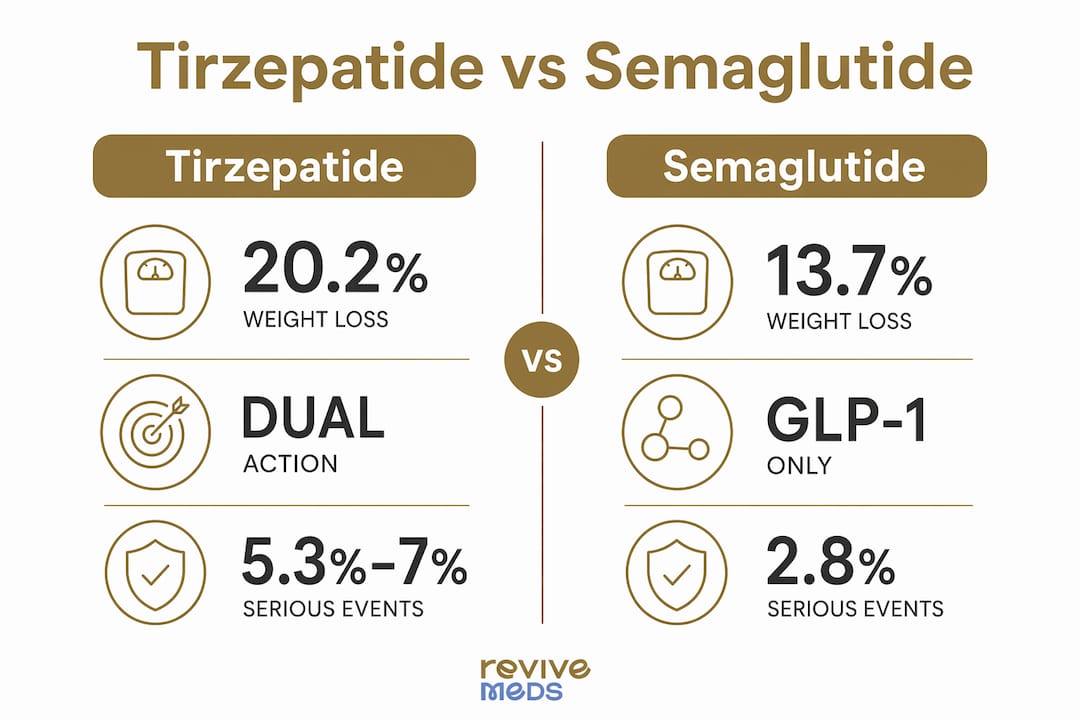
Clinical trial data show 5.3%–7% of tirzepatide patients experienced serious adverse events, compared to 2.8% in the semaglutide group.
| Oral formulation available | No | Yes (daily tablet) |
| Lean muscle mass preservation | Better than caloric restriction alone | Comparable to GLP-1 class |
Beyond raw weight loss, tirzepatide shows strong glycemic benefits. The SURPASS-5 trial found a 2.34% reduction in HbA1c at the 15 mg dose over 40 weeks. For patients managing type 2 diabetes alongside obesity, that dual benefit is clinically significant. The American Diabetes Association categorizes tirzepatide as a highly effective therapy for both glycemic control and weight loss.
Long-term data strengthen the case for tirzepatide’s durability. A three-year study published in the New England Journal of Medicine found sustained weight loss over 176 weeks with no new safety signals, along with reduced progression to type 2 diabetes. That kind of durability matters because obesity is a chronic condition, and stopping GLP-1 therapy typically leads to rapid weight regain.
One more finding worth noting: tirzepatide preserves lean muscle mass better than simple caloric restriction alone, producing body composition changes more similar to surgical weight loss. Losing fat while keeping muscle is harder than it sounds, and most diets fail at it.
- Tirzepatide advantages in trials: Greater total weight loss, stronger HbA1c reduction, favorable body composition changes, long-term durability data
- Semaglutide advantages in trials: Established cardiovascular outcomes data (SELECT trial), longer real-world track record, oral formulation option
- Both medications: Require lifestyle changes to maximize results; weight regain is common after stopping either drug
Side effects and safety: what to expect from each medication
Gastrointestinal side effects are the most common complaint with both drugs. Nausea, vomiting, diarrhea, and constipation affect up to 73% of patients during dose escalation. These effects are mostly mild to moderate and tend to improve as the body adapts, but they are the leading reason patients reduce doses or discontinue treatment.
The safety profiles diverge in a few specific areas:
- Cardiovascular outcomes: Semaglutide carries an FDA-approved indication for reducing major adverse cardiovascular events (MACE). The SELECT trial found a 20% reduction in cardiovascular events in patients with established heart disease. Tirzepatide has cardiovascular outcomes trials underway but no approved indication for this use as of 2026.
- Serious adverse events: Higher doses of tirzepatide are associated with a higher rate of serious side effects. Clinical trial data show 5.3%–7% of tirzepatide patients experienced serious adverse events, compared to 2.8% in the semaglutide group.
- Thyroid tumor risk: Both medications carry a boxed warning about the potential for thyroid C-cell tumors, based on animal studies. Neither drug should be used by patients with a personal or family history of medullary thyroid carcinoma (MTC) or Multiple Endocrine Neoplasia syndrome type 2 (MEN 2).
- Pancreatitis: Both drugs have been associated with pancreatitis. Patients with a history of pancreatitis should discuss this risk carefully with their clinician before starting either medication.
- Gallbladder issues: Rapid weight loss from either drug can increase the risk of gallstones and gallbladder disease.
- Hypoglycemia: Neither drug causes significant low blood sugar on its own, but the risk increases when combined with insulin or sulfonylureas.
Statistic to know: Up to 73% of patients report gastrointestinal side effects during dose escalation with GLP-1 medications. The vast majority are mild to moderate and resolve as the dose stabilizes.
Pro Tip: Take your injection at night if nausea is a problem. Many patients find that sleeping through the first few hours after the dose makes the adjustment period far more manageable.
Patients with a history of diabetic retinopathy should also flag this with their provider. Rapid blood sugar improvement with semaglutide has been associated with worsening retinopathy in some cases. Both medications require regular monitoring, especially in the first year of treatment.
Insurance coverage, cost, and access in the US
Cost is where the tirzepatide vs semaglutide comparison gets complicated fast. Both brand-name medications carry list prices that put them out of reach for most patients without insurance coverage, and formulary decisions vary widely by plan.
Branded medications (Mounjaro, Zepbound, Ozempic, Wegovy): List prices for branded GLP-1 medications generally run over $1,000 per month without insurance. Insurance coverage depends heavily on whether the prescription is for diabetes (more commonly covered) or weight loss alone (frequently excluded from standard commercial plans). Medicare Part D covers Wegovy for cardiovascular risk reduction in patients who qualify under the SELECT trial criteria, but coverage for weight loss alone remains inconsistent.
Compounded versions: FDA-registered compounding pharmacies can produce tirzepatide and semaglutide at significantly lower cost, making these medications accessible to patients whose insurance does not cover the branded versions. Compounded medications are not FDA-approved products, but they are legal when produced by licensed 503B or 503A pharmacies and prescribed by a clinician.
| Factor | Tirzepatide | Semaglutide |
|---|---|---|
| Brand names | Mounjaro (diabetes), Zepbound (weight loss) | Ozempic (diabetes), Wegovy (weight loss) |
| Oral option | No | Yes (daily tablet) |
| Insurance coverage for weight loss | Variable; often limited | Variable; Wegovy covered for CV risk reduction under Medicare |
| Compounded availability | Yes, through licensed pharmacies | Yes, through licensed pharmacies |
| HSA/FSA eligible | Yes, with prescription | Yes, with prescription |
- Manufacturer savings programs: Eli Lilly (tirzepatide) and Novo Nordisk (semaglutide) both offer savings cards for eligible commercially insured patients, which can reduce out-of-pocket costs substantially.
- Prior authorization: Most insurers require prior authorization for GLP-1 medications, often including documentation of BMI, comorbidities, and prior weight loss attempts.
- Oral semaglutide access: For patients with type 2 diabetes who prefer not to inject, oral semaglutide provides an alternative that tirzepatide cannot match.
- Telehealth pathways: Licensed telehealth platforms can prescribe both medications after a full clinical intake, often with faster access than traditional in-person clinics.
The practical reality in 2026 is that insurance coverage, not clinical superiority, often determines which medication a patient starts on. If your plan covers one and not the other, that shapes the conversation with your provider significantly.
How to choose between tirzepatide and semaglutide for weight loss
Choosing between these two medications is not a matter of picking the one with the bigger number in a trial. The right choice depends on your specific health history, your goals, and what you can realistically sustain.
Start with these questions:
- How much weight do you need to lose? If your primary goal is maximum weight loss and you do not have a compelling reason to choose semaglutide, tirzepatide’s clinical data give it an edge.
- Do you have established cardiovascular disease? Semaglutide’s SELECT trial data showing a 20% reduction in MACE make it the stronger choice for patients with existing heart disease.
- Do you have type 2 diabetes? Both medications improve glycemic control, but tirzepatide’s HbA1c reductions are somewhat larger at equivalent doses.
- Do you prefer not to inject? Semaglutide’s oral tablet is the only non-injectable GLP-1 option currently available.
- What does your insurance cover? Coverage often narrows the choice before clinical factors even enter the picture.
- Do you have a history of thyroid cancer, MEN 2, or pancreatitis? Both medications are contraindicated in these cases.
- Are you pregnant or planning to become pregnant? Neither medication is recommended during pregnancy.
Medical considerations checklist:
- Personal or family history of medullary thyroid carcinoma or MEN 2 (contraindication for both)
- History of pancreatitis (use with caution; discuss risk with provider)
- Diabetic retinopathy (monitor closely with semaglutide)
- Current use of insulin or sulfonylureas (hypoglycemia risk increases)
- Gallbladder disease history (both drugs may increase gallstone risk)
- Kidney or liver disease (dose adjustments may be needed)
- Pregnancy or breastfeeding (both drugs should be stopped)
Pro Tip: Bring a list of all your current medications to your first appointment. Both tirzepatide and semaglutide slow gastric emptying, which can affect how quickly other oral medications are absorbed. Your clinician needs the full picture.
Lifestyle integration matters as much as the medication itself. Long-term success with GLP-1 therapies depends on more than the prescription. Patients who pair medication with dietary changes, regular physical activity, and behavioral support consistently achieve better outcomes than those relying on the drug alone. The medication reduces hunger and improves metabolic function; the lifestyle changes build the habits that sustain results.
Shared decision-making with your provider is not a formality. Your clinician can weigh your full medical history, review your current medications, and help you navigate insurance coverage in a way that no comparison article can replicate.
Drug interactions you need to know about
Both tirzepatide and semaglutide interact with other medications in ways that require clinical attention before starting treatment.
Insulin and sulfonylureas: Combining either GLP-1 medication with insulin or sulfonylureas (such as glipizide or glimepiride) increases the risk of hypoglycemia. Clinicians typically reduce insulin doses when initiating GLP-1 therapy. Patients on insulin should not start either medication without a provider adjusting their regimen first.
Other GLP-1 receptor agonists: Tirzepatide should not be combined with semaglutide or any other GLP-1 receptor agonist. The StatPearls clinical reference is explicit: patients using other GLP-1 agents such as semaglutide or liraglutide should not be prescribed tirzepatide concurrently. Similarly, the DailyMed labeling for Wegovy states that concomitant use with other semaglutide-containing products or any other GLP-1 receptor agonist is not recommended.
Oral medications with narrow therapeutic windows: Because both drugs slow gastric emptying, they can delay the absorption of oral medications. This is particularly relevant for drugs where timing of absorption matters, such as oral contraceptives, thyroid medications, and certain antibiotics. Your pharmacist can review your full medication list for interactions.
Switching between tirzepatide and semaglutide: No standardized clinical protocol exists for safely switching between GLP-1 therapies. Some clinicians prefer tapering the first drug and allowing a washout period before starting the second; others transition more directly. The approach varies by provider and patient. If you are considering switching, do not do it without explicit guidance from your prescribing clinician.
Alcohol: Heavy alcohol use increases the risk of pancreatitis with either medication. Moderate consumption is generally not contraindicated, but patients with a history of alcohol-related pancreatitis should avoid both drugs.
What clinical experience tells us about GLP-1 therapy in practice
No single medication fits every patient, and the clinical reality of GLP-1 therapy is more nuanced than any trial summary suggests. The patients who do best are those who enter treatment with realistic expectations, a full medical evaluation, and a clinician who stays involved throughout.
Obesity is a chronic condition, not a short-term problem. GLP-1 medications work while you take them, but stopping treatment typically leads to weight regain. The goal is not a finish line. It is a sustainable protocol that fits your life long-term.
Medical intake matters more than most patients realize. A thorough review of your health history, current medications, and metabolic markers before starting treatment is not bureaucratic overhead. It is what separates a protocol that works from one that causes problems. Clinicians who skip this step are cutting corners that matter.
Practitioner notes on managing GLP-1 therapy:
- Start at the lowest dose and titrate slowly. Rushing the escalation schedule is the most common cause of unnecessary side effects.
- Monitor weight, blood sugar, and kidney function regularly, especially in the first six months.
- If side effects are severe or persistent, dose reduction is preferable to discontinuation. Most patients tolerate a lower dose well.
- Switching from semaglutide to tirzepatide (or vice versa) requires clinical oversight. There is no established safe protocol for this transition, so improvising is not advisable.
- Medication is an adjunct to lifestyle change, not a replacement for it. Patients who treat GLP-1 therapy as a standalone solution tend to regain weight faster after stopping.
Pro Tip: Unlimited provider messaging, like what Revive Meds offers, changes the treatment experience. Being able to ask your clinician a question on a Tuesday evening when nausea spikes is genuinely different from waiting three weeks for a follow-up appointment.
Revive Meds builds its GLP-1 protocols around this principle. Every patient completes a full medical intake reviewed by a licensed clinician before anything is prescribed. Medications are compounded at FDA-registered pharmacies, purity-tested, and delivered to your door. The clinical relationship does not end at the prescription.
Key Takeaways
Tirzepatide produces greater average weight loss than semaglutide in clinical trials, but the right choice depends on your cardiovascular history, insurance coverage, tolerance for side effects, and long-term treatment goals.
| Point | Details |
|---|---|
| Weight loss advantage | Tirzepatide achieved 20.2% vs 13.7% body weight loss with semaglutide at 72 weeks in SURMOUNT-5. |
| Cardiovascular indication | Semaglutide holds an FDA-approved indication for reducing major cardiovascular events; tirzepatide does not as of 2026. |
| Side effect profile | GI side effects affect up to 73% of patients on either drug; serious adverse events run higher with tirzepatide at 5.3%–7% vs 2.8% for semaglutide. |
| Long-term management | Stopping either medication typically leads to rapid weight regain; both require ongoing treatment and lifestyle support. |
| Revive Meds option | Revive Meds provides clinician-supervised GLP-1 therapy via telehealth, with full medical intake, FDA-registered compounding, and unlimited provider messaging. |
The case for slowing down before you decide
The most common mistake patients make when choosing between tirzepatide and semaglutide is treating it like a consumer decision. They read the SURMOUNT-5 numbers, conclude tirzepatide wins, and push their provider for a prescription. That logic is understandable, but it skips the part that actually determines whether the medication works for them specifically.
Clinical trial averages are population statistics. The patient who lost 20.2% of their body weight on tirzepatide in that trial is not you. Your cardiovascular history, your current medications, your kidney function, your insurance plan, and your capacity to tolerate gastrointestinal side effects all shape what the medication will actually do in your body. A patient with established heart disease and a plan that covers Wegovy has a strong argument for semaglutide even though tirzepatide posts bigger weight loss numbers in trials.
There is also a persistence problem that trial data tends to understate. The medication that produces the best outcomes is the one you actually stay on. Patients who push to the highest tirzepatide dose for maximum weight loss sometimes find the side effects intolerable and discontinue entirely. A lower dose of either drug, taken consistently over years, beats a higher dose abandoned after three months. Tolerability is not a secondary concern. It is central to whether treatment succeeds.
Behavioral and lifestyle support is the part most people underinvest in. GLP-1 medications reduce hunger and improve metabolic function, but they do not teach you how to eat differently, manage stress, or build sustainable habits. The patients who maintain their results long-term are almost always the ones who used the medication as a tool within a broader protocol, not as the whole plan.
Choose the medication that fits your health profile, your life, and a clinician you trust to stay involved. That combination outperforms any single trial result.
Clinically supervised GLP-1 therapy, delivered to your door
If you have read this far and you are still not sure which medication fits your situation, that is exactly the right place to be. The answer requires a real clinical conversation, not another article.
Revive Meds offers clinician-supervised GLP-1 therapy through a fully remote intake process. You complete a detailed medical history, a licensed clinician reviews it and determines what is appropriate for you, and your medication ships from an FDA-registered compounding pharmacy within 48–72 hours. No waiting rooms, no membership fees, and no one-size-fits-all protocols. Medications are 99%+ purity tested and HSA/FSA eligible.
The clinical relationship continues after your first prescription. Unlimited provider messaging means your clinician is reachable when questions come up, not just at scheduled appointments. Whether you are weighing GLP-1 squared therapy or starting with a standard semaglutide protocol, the intake process is the same: thorough, individualized, and reviewed by a real clinician before anything is prescribed. Same-day onboarding is available. Real medicine, real oversight.