

Why Diet and Exercise Aren’t Enough: What’s Really Going On

Difficulty losing weight despite eating well and exercising regularly is defined as weight loss resistance, and it is caused by internal metabolic, hormonal, and lifestyle factors that override calorie-based efforts. For adults aged 30–60, the reasons why diet and exercise aren’t enough go far beyond willpower. Adaptive thermogenesis, insulin resistance, thyroid dysfunction, cortisol dysregulation, and sleep deprivation each create a biological environment that favors fat storage. Understanding these mechanisms is the first step toward fixing them.
Why your diet and exercise aren’t enough: the metabolic truth
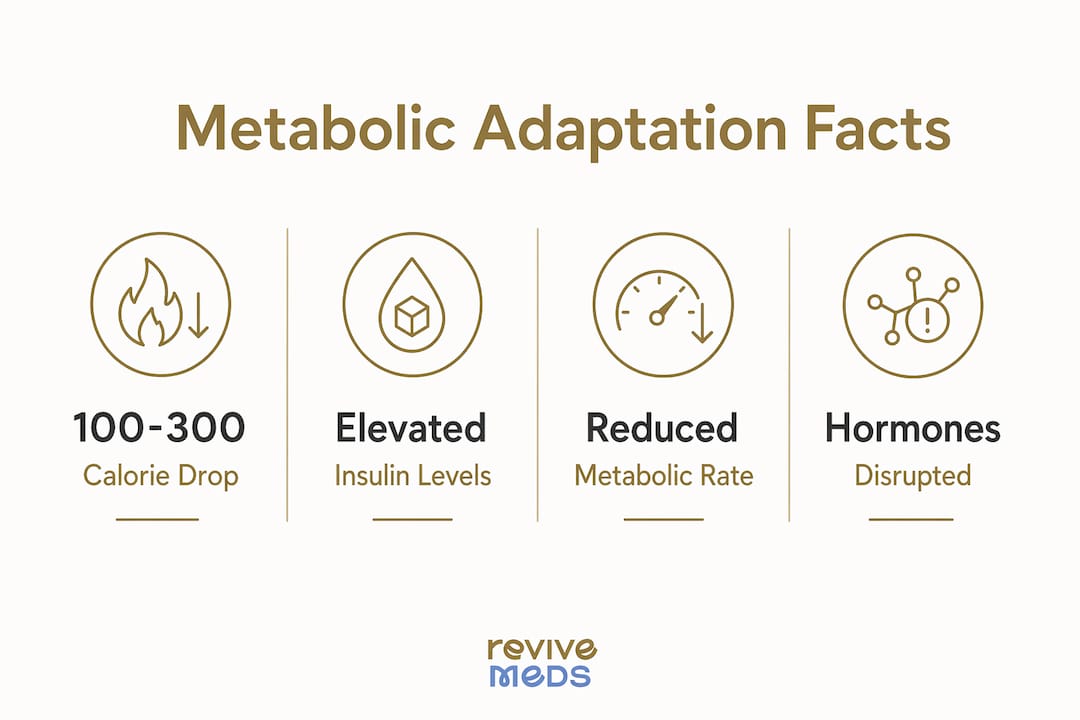
The body treats a calorie deficit as a threat. When you cut calories, your metabolism does not simply burn stored fat to compensate. Instead, it reduces energy expenditure by 100–300 calories per day beyond what weight loss alone would predict. This process is called adaptive thermogenesis, and it is one of the primary reasons why diet fails for so many people who are doing everything right.
Adaptive thermogenesis works through two channels. First, your resting metabolic rate drops. Second, non-exercise activity thermogenesis (NEAT) decreases. NEAT is the energy you burn through fidgeting, standing, and spontaneous movement. During caloric restriction, NEAT declines unconsciously, meaning you sit more, move less, and burn fewer calories without realizing it.
Hormonal changes compound the problem. Leptin falls, ghrelin rises, and the brain receives a persistent hunger signal. This is the biological basis of “food noise,” the relentless mental preoccupation with eating that makes willpower alone ineffective for sustained dieting. The body is not broken. It is doing exactly what evolution designed it to do. The problem is that those survival mechanisms now work against fat loss.
- Energy expenditure drops 100–300 calories per day during sustained calorie restriction
- NEAT declines without conscious awareness, compounding the deficit
- Leptin decreases and ghrelin increases, driving hunger and cravings
- The brain amplifies food-seeking behavior under caloric stress
Pro Tip: If your weight loss has stalled despite consistent effort, the issue is almost certainly metabolic adaptation, not a lack of discipline. Tracking your resting heart rate and energy levels can reveal early signs of metabolic slowdown before the scale confirms it.
How do hormonal imbalances block fat loss?
Hormonal imbalances are among the most overlooked underlying health issues in adults who cannot lose weight. Three specific disruptions account for the majority of cases: insulin resistance, thyroid dysfunction, and cortisol dysregulation.

Insulin resistance chronically elevates insulin levels, which signals the body to store fat rather than burn it. Even a clean diet cannot fully overcome this signal. Elevated insulin blocks fat cells from releasing stored energy, so the body preferentially burns glucose and preserves fat. The result is weight that refuses to move regardless of calorie intake.
Thyroid dysfunction adds another layer. Subclinical hypothyroidism and elevated reverse T3, the inactive form of thyroid hormone, slow metabolism without triggering abnormal results on standard lab panels. Stress and caloric restriction both raise reverse T3, which blocks thyroid receptors and reduces metabolic rate. Many adults with this pattern receive a “normal” thyroid result and are sent home without answers.
Chronic stress raises cortisol, which promotes abdominal fat storage, breaks down lean muscle, and worsens insulin resistance simultaneously. This is why high-stress adults often gain weight in the midsection even when their diet is controlled. Cortisol dysregulation creates a self-reinforcing cycle that diet and exercise alone cannot break.
- Insulin resistance: fat cells locked in storage mode despite calorie control
- Elevated reverse T3: metabolism slowed without obvious thyroid lab abnormalities
- High cortisol: abdominal fat accumulation, muscle loss, and worsened insulin sensitivity
- Systemic inflammation: disrupts hormone signaling and impairs fat metabolism
Standard annual physicals rarely test for reverse T3, fasting insulin, or cortisol patterns. A comprehensive metabolic panel that includes these markers is the starting point for identifying thyroid and metabolic dysfunction that standard care misses.
What lifestyle factors beyond diet are sabotaging your results?
Sleep and food quality are two lifestyle variables that directly alter calorie intake and metabolic function, independent of how much you exercise. Sleep restriction increases daily calorie intake by approximately 300 calories per day. That single variable can erase a carefully maintained calorie deficit without any change in diet or exercise behavior.
Ultra-processed foods create a separate and larger problem. Controlled trials show that people eating ultra-processed diets consume approximately 500 extra calories per day compared to whole-food diets, even when meals are matched for calories on paper. Ultra-processed foods disrupt satiety hormones, accelerate eating speed, and trigger the brain’s reward pathways in ways that whole foods do not. The result is consistent overconsumption that feels involuntary because, biologically, it largely is.
Chronic inflammation ties these factors together. Poor sleep, high stress, and a processed food diet each independently raise inflammatory markers. Inflammation interferes with leptin signaling, worsens insulin sensitivity, and impairs the hormonal environment required for fat burning. Addressing inflammation is not optional for adults with weight loss resistance. It is central to the solution.
- Prioritize 7–9 hours of sleep per night as a non-negotiable metabolic intervention
- Replace ultra-processed foods with whole, minimally processed options to reduce involuntary overconsumption
- Use stress reduction practices such as structured breathing, walking, or mindfulness to lower cortisol
- Reduce alcohol, which disrupts sleep architecture and raises cortisol simultaneously
Pro Tip: Improving sleep quality is one of the fastest ways to reduce food noise and lower cortisol simultaneously. Even shifting bedtime 30 minutes earlier for two weeks produces measurable changes in hunger hormones.
Why does exercise have a calorie ceiling?
Exercise is not a reliable primary tool for creating a calorie deficit. Above moderate activity levels, total daily calorie burn plateaus because the body operates on a constrained energy budget. When exercise volume increases, the body compensates by reducing energy allocated to immune function, tissue repair, and hormone production. Total daily expenditure stays relatively fixed, not linear.
This “calorie ceiling” effect is particularly pronounced in people with higher body fat percentages, where the compensation rate is greater. The practical implication is significant. Adding a second workout does not double the calorie burn. The body absorbs the extra activity by cutting energy elsewhere, limiting fat loss via exercise alone.
| Role | Diet | Exercise |
|---|---|---|
| Primary function | Controls calorie deficit size | Improves body composition and metabolic health |
| Effect on weight loss | Direct and measurable in early phases | Indirect; supports long-term maintenance |
| Limitation | Triggers adaptive thermogenesis | Subject to calorie ceiling above moderate intensity |
| Best use | Creating the deficit | Preserving muscle and improving insulin sensitivity |
Diet controls the deficit; exercise controls body composition. Both are necessary, but conflating their roles leads to frustration. People who exercise more expecting to eat more often stall because the body compensates. People who diet without exercising lose muscle along with fat, which further reduces metabolic rate.
Pro Tip: Resistance training is the most metabolically protective form of exercise during a calorie deficit. It preserves lean muscle, which keeps resting metabolic rate from dropping as sharply during weight loss.
What actually works for overcoming weight loss resistance?
Sustainable weight loss in adults with metabolic barriers requires a structured, multi-factor approach. Combined diet and physical activity interventions produce an average of 7.4 kg of weight loss at 12 months. Physical activity alone produces only 1.8 kg. The combination is not additive. It is synergistic, because each component addresses a different biological barrier.
- Get a comprehensive metabolic panel. Test fasting insulin, reverse T3, free T3, cortisol, and inflammatory markers such as CRP. Standard labs miss the conditions most likely to cause weight loss resistance.
- Address hormonal imbalances directly. Insulin resistance, thyroid dysfunction, and cortisol dysregulation each require targeted clinical intervention, not just lifestyle modification.
- Prioritize sleep as a medical priority. Seven to nine hours of quality sleep reduces hunger hormones, lowers cortisol, and improves insulin sensitivity without any other intervention.
- Eliminate ultra-processed foods systematically. Replace them with whole foods that support satiety hormone function and reduce the involuntary overconsumption that processed foods drive.
- Consider personalized metabolic support when lifestyle changes plateau. Modern metabolic therapies, including GLP-1 receptor agonists, work by addressing the biological hunger and insulin signaling that lifestyle changes alone cannot fully correct.
Sustainable weight loss requires long-term, structured, personalized support that respects biological hunger and energy signals. Quick fixes that ignore the underlying metabolic environment produce short-term results and long-term frustration. The goal is to fix the internal environment first, then let the lifestyle changes work as intended.
Key Takeaways
Weight loss resistance in adults is driven by internal metabolic and hormonal factors that diet and exercise alone cannot override, making clinical evaluation and a multi-factor approach the most effective path forward.
| Point | Details |
|---|---|
| Adaptive thermogenesis is real | The body cuts 100–300 calories of daily expenditure during dieting, stalling fat loss. |
| Hormones override effort | Insulin resistance, elevated reverse T3, and high cortisol each independently block fat burning. |
| Sleep and food quality matter | Sleep restriction adds ~300 kcal/day; ultra-processed diets add ~500 kcal/day in excess intake. |
| Exercise has a ceiling | Above moderate intensity, extra exercise does not increase total daily calorie burn linearly. |
| Combination beats single-factor | Diet plus exercise produces 7.4 kg average loss at 12 months versus 1.8 kg from exercise alone. |
The parking brake nobody told you about
I have spent years watching people do everything right and still get nowhere. Clean meals, consistent workouts, early bedtimes. And the scale barely moves. The frustration is real, and it is almost always misplaced on a perceived lack of effort.
The best analogy I have found is this: trying to lose weight with unaddressed metabolic dysfunction is like pressing the gas while the parking brake is engaged. You can rev the engine as hard as you want. The car does not move the way it should. The problem is not the driver. The problem is the brake.
What I find most striking is how rarely the brake gets checked. Standard care measures weight, blood pressure, and basic thyroid function. It almost never measures fasting insulin, reverse T3, cortisol patterns, or inflammatory load. Those are exactly the variables that determine whether a person’s body will respond to diet and exercise or quietly compensate against every effort.
The mindset shift that actually helps people is moving from “I need to try harder” to “I need to understand what my body is doing and why.” That shift is not resignation. It is the most productive thing a frustrated adult can do. Getting the right metabolic assessment is not giving up on lifestyle changes. It is making sure those changes have a fair chance of working.
— Amy
When Revive Meds makes sense for weight loss resistance
If you have been consistent with diet and exercise and your results have stalled, the issue is likely biological, not behavioral. Revive Meds is a licensed telehealth platform that starts with a full medical intake reviewed by a licensed clinician, specifically to identify the metabolic and hormonal barriers that standard care misses.

Revive Meds offers clinician-supervised GLP-1 therapy for adults whose weight loss resistance is driven by insulin dysregulation and amplified hunger signaling. All medications are US-compounded at FDA-registered pharmacies, 99%+ purity tested, and delivered to your door in 48–72 hours. No membership fees, no waiting rooms. HSA/FSA eligible with same-day onboarding. Real clinical oversight, built around your biology.
FAQ
Why does diet and exercise stop working after 40?
Adaptive thermogenesis, declining hormone levels, and accumulated insulin resistance all intensify with age, making the body more resistant to calorie-based interventions after 40.
What is adaptive thermogenesis?
Adaptive thermogenesis is the body’s unconscious reduction of daily energy expenditure by 100–300 calories during caloric restriction, driven by drops in resting metabolic rate and NEAT.
Can insulin resistance prevent weight loss even on a clean diet?
Yes. Insulin resistance keeps insulin levels chronically elevated, which signals fat cells to store energy rather than release it, regardless of how clean or calorie-controlled the diet is.
How does poor sleep cause weight gain?
Sleep restriction increases daily calorie intake by approximately 300 calories through hormonal changes that raise ghrelin and lower leptin, increasing hunger and reducing satiety signals.
When should I seek medical evaluation for weight loss resistance?
Seek a comprehensive metabolic evaluation if you have maintained a consistent calorie deficit and exercise routine for 8–12 weeks without meaningful progress, as underlying hormonal or metabolic conditions are the most likely cause.
Recommended
- I was training others to lose weight while secretly binging ice cream every night. – revive health
- Home – revive health
- 10 Things That Happen When You Finally Get Help for Stubborn Menopause Weight (That Actually Work) – revive health
- Endocrinologist: Struggling to lose weight? This GLP-1 breakthrough is changing lives – revive health