

Your First Month of GLP-1 Therapy: What to Expect

Your first month of GLP-1 therapy is defined by one goal: building tolerance, not losing weight. GLP-1 receptor agonists, the clinical term for drugs like semaglutide and tirzepatide, work by mimicking gut hormones that regulate appetite, slow gastric emptying, and signal fullness to the brain. What to expect in your first month of GLP-1 therapy is not a dramatic transformation. Clinical trials show 15–21% body weight loss achieved over 68–72 weeks, not in the first 30 days. The first month is about your body learning to work with the medication. Patients who understand this from day one are far more likely to stay the course and reach the results that matter.
What physiological and behavioral changes happen in the first month?
GLP-1 receptor agonists slow gastric emptying, which means food stays in your stomach longer. That single mechanism explains most of what you feel in the early weeks: fullness after small amounts of food, nausea after eating too fast, and a general quieting of hunger signals. Your brain is also receiving new hormonal input, and it takes time to recalibrate.
Approximately 74% of patients experience gastrointestinal symptoms during major trials, with side effects typically resolving within 4–8 weeks. That number sounds high, but most symptoms are mild to moderate. The most common ones include:
- Nausea: Peaks around weeks 1–2 and generally improves as the body adapts
- Constipation: Slowed gut motility affects bowel regularity for many patients
- Bloating and fullness: Normal responses to slower digestion
- Diarrhea: Less common but possible, especially after fatty meals
- Mild fatigue: Often tied to reduced caloric intake and the body adjusting
Beyond the physical, the behavioral changes are where things get interesting. Many patients describe a reduction in “food noise,” the constant mental chatter about what to eat next, what you’re craving, or when you’ll snack again. This quieting of food noise reflects the brain adapting to new hormonal signals, not a side effect to worry about. Some patients feel emotionally neutral about food for the first time in years. That shift can feel strange, even disorienting, before it feels like relief.
Pro Tip: Track your appetite changes in a simple notes app rather than obsessing over the scale. Noticing that you left half your plate or skipped your usual afternoon snack is real evidence the medication is working.

How does dosing and medical supervision work in the first month?
Starting doses are intentionally low. The typical starting dose is 0.25 mg for semaglutide and 2.5 mg for tirzepatide. These doses are not therapeutic. They exist purely to let your digestive system adapt without triggering severe side effects. Think of it as a calibration period, not a treatment period.
The slow titration schedule is designed with a clear purpose:
- Week 1–4: Start at the lowest dose. Your body begins adjusting to slowed gastric emptying and new hormonal signals.
- Week 5–8: Dose typically increases to the next level if you have tolerated the starting dose well.
- Week 9 onward: Continued escalation follows a clinician-monitored schedule until you reach your therapeutic dose.
Premature dose escalation is the most common cause of intolerable side effects that lead patients to quit treatment entirely. Self-increasing your dose because you feel fine at week two is one of the most counterproductive things you can do. The titration schedule exists for a reason, and skipping it trades short-term impatience for long-term setbacks.
Clinical monitoring during the first 30 days typically includes reviewing your side effect profile, confirming you are tolerating the current dose, and checking in on any changes to blood sugar, blood pressure, or kidney function. At Revive Meds, every patient has access to unlimited provider messaging, so you can flag symptoms or ask questions without waiting for a scheduled appointment.
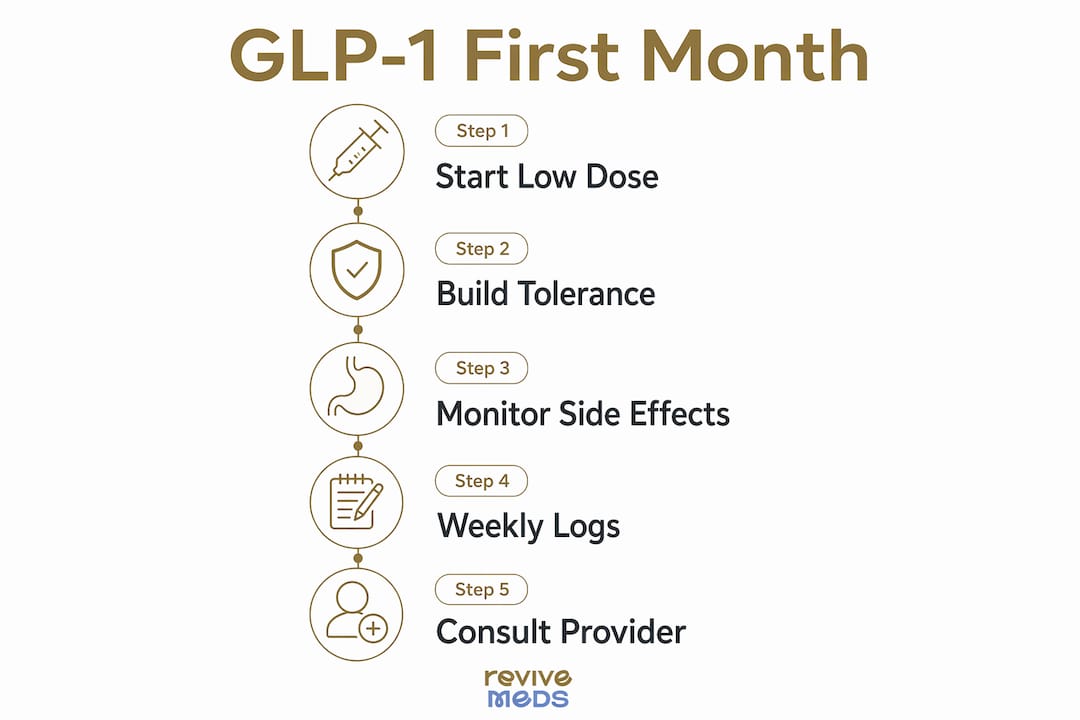
Pro Tip: Keep a brief weekly log of your symptoms, energy levels, and any GI issues. Bring this to your provider check-in. It makes dose adjustment decisions faster and more accurate.
What are the practical strategies to manage side effects?
Managing side effects in the first month comes down to working with the medication’s mechanism, not against it. GLP-1 drugs slow gastric emptying. Large, fatty, or fast-eaten meals overwhelm a stomach that is already moving slowly. The fix is straightforward.
Eating smaller meals, avoiding high-fat foods early on, and staying well hydrated are the three most effective adjustments you can make. These changes accommodate the slower digestion the medication creates. Here are the most practical strategies:
- Eat smaller portions more frequently. Three large meals become four or five smaller ones. Your stomach signals fullness faster now, so honor that signal.
- Avoid greasy, fried, or very rich foods. These are the most common nausea triggers in the first month.
- Hydrate consistently. Aim for water throughout the day rather than large amounts at once. Dehydration worsens nausea and fatigue.
- Add dietary fiber gradually. Fiber helps with constipation, but adding too much too fast can worsen bloating. Increase slowly over one to two weeks.
- Eat slowly and chew thoroughly. Rushing a meal is the fastest way to trigger nausea when gastric emptying is slowed.
Monitoring for rare but serious symptoms is also part of first-month management. Severe abdominal pain, persistent vomiting, or signs of dehydration require contacting your provider immediately. These are not typical side effects. They are warning signs for complications like pancreatitis, and they need clinical attention.
The emotional side of appetite changes deserves attention too. Patients who have used food for stress relief or comfort for years may feel unexpectedly lost when cravings disappear. Recognizing this as a normal part of the adjustment to new appetite patterns helps you respond with curiosity rather than alarm.
Pro Tip: If nausea is your main complaint, try taking your injection in the evening. Many patients find that sleeping through the peak nausea window makes the first few weeks significantly more manageable.
What weight and health changes should you realistically expect?
The scale in month one is a poor measure of whether GLP-1 therapy is working. Weight fluctuations in the first month often reflect water balance changes and glycogen depletion, not actual fat loss. Seeing the number drop two pounds one week and rise one pound the next does not mean the medication is failing. It means your body is in flux.
The patients who succeed long-term are not the ones who lost the most weight in month one. They are the ones who noticed their relationship with food starting to shift and trusted that process. Behavioral markers like reduced food noise and smaller portions are the real leading indicators of GLP-1 engagement.
The health benefits that do begin in the first month are largely invisible on a scale. GLP-1 therapy provides early improvements in blood sugar regulation, cardiometabolic markers, and kidney function, often before any visible weight change. These biochemical shifts matter enormously for long-term health, even when they do not show up as a lower number on the bathroom floor.
| What to track | What it means |
|---|---|
| Reduced portion sizes | The medication is modulating appetite signals effectively |
| Less frequent snacking | Food noise is decreasing, a key early indicator of GLP-1 engagement |
| Improved blood sugar readings | Glycemic benefits begin early, independent of weight loss |
| Lower nausea frequency | Your gut is adapting to the medication as expected |
| Stable energy levels | Caloric reduction is being managed without significant fatigue |
Experts advise shifting focus from rapid weight loss to observing changes in hunger and your relationship with food. This reframe is not just motivational advice. It is clinically grounded. Patients who track behavioral leading indicators in month one report higher adherence and better outcomes at the six-month mark.
My honest take on the first month
The first month of GLP-1 therapy is the one that trips people up the most, and almost always for the same reason. Patients expect the medication to do something dramatic right away. When it does not, they assume it is not working. I have seen this pattern repeatedly, and it is worth addressing directly.
The first month is a discovery phase. You are learning how your body responds to a new hormonal signal. Some patients are hyper-responders who feel significant appetite suppression from week one. Others feel almost nothing at the starting dose. Neither response predicts your long-term outcome. What predicts success is staying consistent, communicating with your clinical team, and resisting the urge to escalate your dose ahead of schedule.
The emotional changes are the part no one fully prepares you for. When food stops feeling like a reward or a comfort, it can create a genuine sense of loss before it creates freedom. Give yourself permission to notice that without judgment. The relationship with food you are building now, one based on hunger and satisfaction rather than habit and craving, is the foundation everything else rests on.
The patients I have seen do best in month one are not the ones who white-knuckle through side effects alone. They are the ones who stay in contact with their provider, adjust their eating habits proactively, and measure progress by how they feel rather than what the scale says. That mindset is not just more sustainable. It is more accurate.
— Amy
How Revive Meds supports your first month on GLP-1 therapy
Starting GLP-1 therapy with the right clinical support changes the experience entirely.
Revive Meds provides clinician-supervised GLP-1 therapy programs with same-day onboarding, no membership fees, and unlimited provider messaging throughout your treatment. Every patient completes a full medical intake reviewed by a licensed clinician before anything is prescribed. Medications are US-compounded at FDA-registered pharmacies, 99%+ purity tested, and delivered to your door in 48–72 hours. If you want to understand the full scope of what telehealth GLP-1 access looks like in 2026, Revive Meds has the clinical infrastructure to support you from your first injection through your long-term goals. HSA/FSA eligible.
FAQ
What is the main goal of the first month on GLP-1 therapy?
The first month is primarily a tolerance-building phase, not a weight loss phase. Starting doses like 0.25 mg semaglutide are designed to let your digestive system adapt before escalating to therapeutic levels.
How long do GLP-1 side effects typically last?
Most GI side effects, including nausea and bloating, peak around weeks 1–2 and resolve within 4–8 weeks as the body adjusts to slowed gastric emptying.
Is it normal to not lose weight in the first month?
Yes. Significant weight loss from GLP-1 therapy occurs over 68–72 weeks, not in the first 30 days. Early scale changes typically reflect water and glycogen shifts rather than fat loss.
Can I increase my dose faster if I feel fine?
No. Self-increasing your dose ahead of the prescribed schedule is the leading cause of severe side effects and treatment discontinuation. Always follow your clinician’s titration plan.
What early signs show that GLP-1 therapy is working?
Reduced appetite, smaller portion sizes, less frequent snacking, and quieter food cravings are the key behavioral indicators that the medication is engaging correctly, even before the scale moves.
Key takeaways
The first month of GLP-1 therapy is a tolerance-building phase where behavioral changes in appetite and food habits are the most reliable early indicators of long-term success.
| Point | Details |
|---|---|
| Month one is for adaptation | Starting doses build gut tolerance, not therapeutic weight loss results. |
| GI side effects are expected and temporary | Around 74% of patients experience symptoms that typically resolve within 4–8 weeks. |
| Never self-escalate your dose | Premature dose increases are the top cause of severe side effects and dropout. |
| Track behavior, not just the scale | Reduced food noise and smaller portions signal GLP-1 engagement before weight changes appear. |
| Early health benefits are real | Blood sugar, cardiometabolic, and kidney improvements often begin in the first month, independent of weight loss. |