

Your Guide to Peptides: Benefits, Safety, and Results

Peptides are short chains of amino acids that act as biological messengers, signaling your body to regulate metabolism, repair tissue, release hormones, and slow cellular aging. This guide to peptides covers everything from FDA-approved therapies like semaglutide and liraglutide to experimental compounds like BPC-157 and GHK-Cu, so you can make informed decisions rather than guesses. The peptide market in 2026 spans three very different categories: regulated drugs with strong clinical evidence, legal over-the-counter supplements, and grey-market injectables with little to no human trial data. Knowing which category a peptide falls into is the single most important factor in whether it helps or harms you.
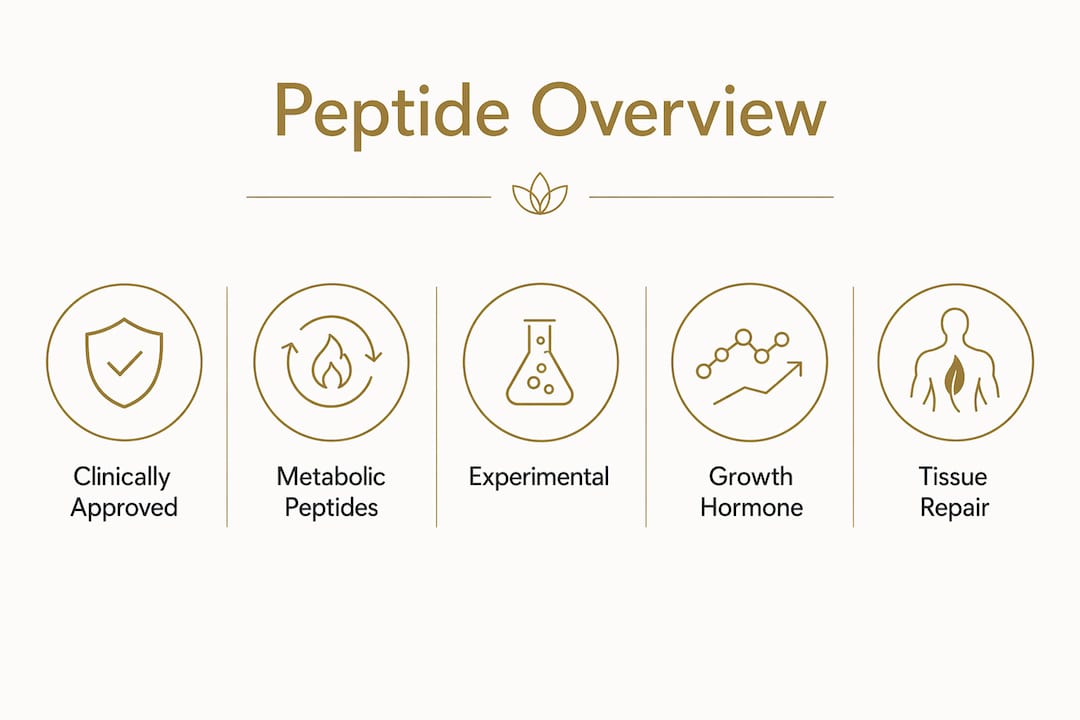
What is a guide to peptides without understanding the categories?
Peptides fall into four broad functional classes, each with distinct mechanisms, delivery methods, and evidence profiles. Understanding these classes is the foundation of any practical peptide supplements guide.
Metabolic peptides are the most clinically validated group. GLP-1 analogs like semaglutide and liraglutide mimic glucagon-like peptide-1, a gut hormone that regulates insulin secretion, slows gastric emptying, and suppresses appetite. GIP (glucose-dependent insulinotropic polypeptide) and amylin analogs work alongside GLP-1 pathways to improve glucose control and reduce body weight. These are the peptides with the deepest clinical trial records.

Growth hormone releasing peptides (GHRPs) and growth hormone releasing hormones (GHRHs) stimulate the pituitary gland to produce more growth hormone. Compounds in this class are used off-label for muscle preservation, fat loss, and recovery acceleration. Tissue repair peptides like BPC-157 (Body Protection Compound 157) and TB-500 (Thymosin Beta-4) have shown regenerative effects in animal models, particularly for tendon, ligament, and gut healing, but human clinical data remains sparse.
Aesthetic and skin peptides include GHK-Cu (copper peptide), which promotes collagen synthesis and has antioxidant properties, and collagen peptides taken orally to support skin elasticity. Routes of administration vary widely: subcutaneous injections are most common for metabolic peptides, while topical formulations serve local skin actions and oral peptides require special formulation techniques to survive digestion.
Here is a quick breakdown of delivery methods and their typical applications:
- Subcutaneous injection: GLP-1 analogs, GHRPs, BPC-157
- Nasal spray: Some GHRH compounds, PT-141 (bremelanotide)
- Oral capsule or powder: Collagen peptides, some experimental formulations
- Topical cream or serum: GHK-Cu, matrixyl (palmitoyl pentapeptide-4)
Peptide stability varies significantly by structure. Injectable peptides degrade rapidly at room temperature, which is why proper cold-chain storage matters. Oral peptides face enzymatic breakdown in the gut, which is why most high-potency peptides are not effective in pill form without specialized delivery technology.
Pro Tip: If a company sells a peptide that is normally injectable as a simple oral capsule and claims full bioavailability, treat that claim with serious skepticism until you see published absorption data.
Which peptides have clinical evidence and which are experimental?
The regulatory and evidence gap between approved and unapproved peptides is wider than most marketing suggests. This distinction is the core of any honest peptide therapy overview.
| Peptide | Regulatory Status | Primary Evidence | Main Use |
|---|---|---|---|
| Semaglutide (Ozempic, Wegovy) | FDA-approved | Phase 3 RCTs, long-term trials | Type 2 diabetes, obesity |
| Liraglutide (Victoza, Saxenda) | FDA-approved | Multiple RCTs | Type 2 diabetes, weight loss |
| Tirzepatide (Mounjaro, Zepbound) | FDA-approved | Phase 3 RCTs | Type 2 diabetes, obesity |
| BPC-157 | Not FDA-approved | Animal studies only | Recovery, gut healing |
| TB-500 | Not FDA-approved | Animal studies only | Tissue repair |
| GHK-Cu | Not FDA-approved | In vitro, limited human data | Skin anti-aging |
GLP-1 based therapies are the most evidence-backed peptides for metabolic outcomes, with decades of randomized controlled trial data supporting their use in type 2 diabetes and obesity. Semaglutide, in particular, has demonstrated 15 to 20 percent body weight reductions in large-scale trials. That level of evidence simply does not exist for grey-market compounds.
Most non-FDA-approved peptides promoted for recovery or tissue repair lack human clinical trials entirely. Researcher Stuart Phillips has noted that clinicians building protocols around BPC-157 or TB-500 are essentially working without a safety net, extrapolating from rodent data to human physiology. That is not inherently wrong, but it is a risk you should consciously accept, not stumble into.
Consumer peptide products sold online are frequently labeled “for research use only,” a legal disclaimer that signals the product has not been verified for safe human consumption. Impurity profiles, accurate dosing, and sterility are not guaranteed in these products. FDA quality standards for regulated peptide drugs include immunogenicity risk assessments and strict impurity profiling, none of which apply to grey-market injectables.
Pro Tip: Before purchasing any injectable peptide online, ask the seller for a certificate of analysis from a third-party lab. If they cannot provide one, do not inject it.
What are the real benefits of peptides for health, fitness, and aging?
The benefits of peptides are real in some categories and speculative in others. Here is where the evidence actually stands.
Metabolic and weight management benefits are the strongest area. GLP-1 agonists reduce fasting glucose, lower HbA1c, suppress appetite, and produce sustained weight loss. GLP-1 medicines are also showing potential in ongoing trials for neurodegenerative diseases and substance use disorders, which suggests the therapeutic reach of this peptide class extends well beyond metabolism. That is a meaningful signal for long-term health optimization.
Anti-aging applications are promising but incomplete. Therapeutic peptides targeting aging hallmarks face major gaps including poorly defined dosing, limited long-term safety data, and regulatory challenges. GHK-Cu has shown collagen-stimulating and antioxidant activity in cell studies, but translating that to meaningful anti-aging outcomes in humans requires clinical trials that largely do not yet exist.
Recovery and tissue repair represent the most hyped and least proven category. BPC-157 and TB-500 have generated genuine excitement based on animal research showing accelerated tendon healing and reduced inflammation. The problem is that animal data does not reliably predict human outcomes, and many popular peptides rely mainly on testimonials rather than controlled trials.
Skin health is a middle ground. Topical GHK-Cu and oral collagen peptides have more human data than most experimental injectables. Studies on collagen peptides show modest but measurable improvements in skin elasticity and hydration. Therapeutic peptides in aesthetic conditions show promise but require further clinical validation before widespread use.
Known limitations you should factor into your decisions:
- Side effects of GLP-1 agonists include nausea, vomiting, and in rare cases pancreatitis
- Long-term safety data for most peptides beyond the GLP-1 class is absent
- Dosing for experimental peptides is largely guesswork without clinical trials
- Interactions between peptides and existing medications are poorly studied
Pro Tip: If you are using peptides for anti-aging, research with clear goals and defined dosing strategies rather than casual longevity use. Vague intentions lead to inconsistent protocols and uninterpretable results.
How to use peptides safely and avoid common mistakes
Practical guidance on how to use peptides starts with one principle: the safest peptide is a regulated one with known dosing, verified purity, and a prescribing clinician in the loop.
-
Start with FDA-approved options when your goal allows it. If you are targeting weight loss or metabolic health, semaglutide or tirzepatide offer the strongest evidence and the clearest safety profile. Starting with well-studied GLP-1 peptides and expanding only with sound clinical evidence is the most practical approach for most people.
-
Verify purity before injecting anything. Consumer safety is directly tied to whether a peptide is a finished, regulated product with known data or an unregulated grey-market product with unknown impurities. A third-party certificate of analysis is the minimum standard.
-
Work with a licensed clinician for dosing and administration. Peptide dosing is not one-size-fits-all. Body weight, health status, and treatment goals all affect the right protocol. A telehealth provider with peptide expertise can build a personalized plan and monitor your response over time.
-
Never mix or reconstitute injectables without training. DIY reconstitution of lyophilized peptides introduces contamination risk and dosing errors. Sterile technique matters, and mistakes can cause serious infections.
-
Monitor your response and stay skeptical of marketing claims. Track measurable outcomes: body composition, lab values, energy, recovery time. If a peptide company promises dramatic results without citing peer-reviewed data, that is a red flag, not a selling point.
You can explore the peptide weight loss protocol at Revive-meds for a structured example of how a clinician-supervised approach differs from self-directed grey-market use.
Pro Tip: HSA and FSA accounts can often cover clinician-prescribed peptide therapies, which makes medically supervised care more affordable than many people assume.
Key takeaways
Peptides with FDA approval and rigorous clinical trial data deliver measurable benefits; grey-market compounds require caution, verified purity, and medical supervision before use.
| Point | Details |
|---|---|
| Know your peptide category | FDA-approved, OTC, and grey-market peptides carry very different evidence and safety profiles. |
| GLP-1s lead on evidence | Semaglutide and tirzepatide have the strongest clinical data for metabolic and weight outcomes. |
| Grey-market risk is real | Products labeled “research use only” lack verified purity, dosing accuracy, and human safety data. |
| Anti-aging data is limited | Promising mechanisms exist, but long-term human trials for most anti-aging peptides are absent. |
| Supervision changes outcomes | A licensed clinician provides personalized dosing, monitors side effects, and reduces safety risk. |
Why the peptide hype cycle deserves a second look
I have spent years watching health trends move from fringe to mainstream, and peptides are following the same arc as testosterone replacement therapy did a decade ago. The science is real. The hype is also real. And the gap between the two is where people get hurt.
What concerns me most is not the peptides themselves. It is the confidence with which people inject compounds that have never been tested in a single human trial. BPC-157 may well turn out to be a legitimate recovery tool. But “may well” is not a clinical standard, and your body is not a research study.
The approved GLP-1 class is genuinely exciting. The data on semaglutide and tirzepatide for weight, metabolic health, and now neurological conditions is some of the most compelling I have seen in years. If your goals align with what these drugs do, there is no reason to reach for something less proven.
My honest advice: treat the peptide space the way you would treat any investment. Start with the highest-quality, most-regulated option available. Add experimental compounds only when you have a clear rationale, a clinician’s oversight, and a way to measure whether it is actually working. The people who get the best results from peptide therapy are not the ones who try everything. They are the ones who understand what they are taking and why.
— Amy
Start your peptide therapy with clinician support at Revive-meds
If this guide has clarified what peptides can and cannot do, the next step is finding a provider who applies that same standard of evidence to your care.
Revive-meds is a licensed telehealth clinic that offers medical-grade GLP-1 therapies, peptides, and hormone support, all compounded at FDA-registered pharmacies with 99%+ purity testing and clinician review before every order ships. There are no membership fees, no waiting rooms, and no generic protocols. Care arrives at your door in 48 to 72 hours, with unlimited provider messaging and HSA/FSA eligibility. To understand how GLP-1 peptides work at the receptor level before you start, read what GLP-1 receptors do in your brain. When you are ready to move forward, explore the GLP-1 Squared program for a structured, evidence-based protocol.
FAQ
What are peptides, exactly?
Peptides are short chains of amino acids, typically 2 to 50 amino acids long, that act as biological messengers in the body. They differ from proteins primarily in length and are used therapeutically to mimic or amplify natural signaling processes.
Are peptide supplements the same as peptide drugs?
No. FDA-approved peptide drugs like semaglutide undergo rigorous clinical trials, quality testing, and regulatory review. Most peptide supplements and grey-market injectables carry no such verification and are often labeled “for research use only.”
What are the best peptides for weight loss?
Semaglutide (Wegovy) and tirzepatide (Zepbound) are the most clinically supported peptides for weight loss, with trial data showing 15 to 20 percent body weight reductions. Both require a prescription and medical supervision.
Is BPC-157 safe for humans?
BPC-157 has shown regenerative effects in animal studies, but no completed human clinical trials exist as of 2026. Its safety profile, effective dosing, and long-term effects in humans remain unknown, which makes unsupervised use a significant risk.
How do I know if a peptide product is legitimate?
Look for a certificate of analysis from an independent third-party lab, a licensed prescribing clinician, and compounding at an FDA-registered pharmacy. Products without these standards cannot verify purity, dosing accuracy, or sterility.